
Finding effective tools to review and rework processes is a real challenge for any agile team. Retrospective tools can make a measurable difference in project management and the results a team delivers, especially once the team has grown too large to run a retrospective on a whiteboard alone.
This article walks through the top 10 retrospective tools, covering their standout features and how each one can change the way your team works, sprint after sprint.
Key Takeaways
- Retrospective tools are important for agile teams to review and improve their processes.
- When choosing a retrospective tool, consider factors like a user-friendly interface, customization options, integration with other tools, and collaboration features.
- The top 10 retrospective tools include ClickUp, Reetro, ScatterSpoke, Neatro, Parabol, goReflect, EasyRetro,
Why Retrospectives are Important in Agile

Retrospectives play a key role in agile. They give teams a chance to check how they’re doing, build on what’s working, and fix what isn’t.
That’s how a team keeps improving over time instead of repeating the same mistakes over and over, sprint after sprint.
Agile retrospectives give every team member a voice. Ideas can be shared and heard without fear at these meetings, which builds trust within the team and can lead to more success on future projects. That psychological safety is easy to lose if the meetings feel disorganized or one-sided.
What to Look for in a Retrospective Tool
When choosing a retrospective tool, it’s worth considering factors such as user-friendly interface, customization options, integration with other tools, and collaboration features.
User-friendly interface
A user-friendly interface is a must for any retrospective tool. These tools need to be simple, so team members can find what they need quickly instead of hunting through menus.
Nobody wants to waste meeting time figuring out how the tool works instead of actually discussing what came up during the sprint.
Buttons should stand out and labels should make sense, so everyone knows what each function does without needing help. That’s what makes a retrospective tool faster and more efficient to run.
EasyRetro, for example, uses bright colors and large fonts that help users see things clearly. ClickUp has a clean layout that lets you find everything fast.
Customization options
Good retrospective tools let you adjust the setup to fit your team’s needs, whether that’s themed boards, unique feedback methods, or color coding for different tasks.
ClickUp and EasyRetro are both known for offering a lot of room to make changes. That means teams can use the tool in a way that makes sense to them, and spend their energy on the work instead of fighting the tool’s defaults.
Integration with other tools
Retrospective tools that integrate with other software can be incredibly useful for agile teams and project management. These integrations let information flow between different platforms, which makes it easier to track progress, manage tasks, and collaborate effectively.
Some retrospective tools integrate with popular project management tools like Jira, letting users import data directly from their projects into the retrospective tool.
Others integrate with communication platforms like Slack or Microsoft Teams, so team members stay connected and can share insights in real time. These integrations save time and keep relevant information in one place, which improves efficiency and streamlines the retrospective process.
Collaboration features
Collaboration features matter a lot when choosing a retrospective tool, since they let team members work together effectively regardless of location or time zone.
With collaboration features, teams can communicate and share ideas during the retrospective process, leaving comments, giving feedback, and working through improvement actions in real time.
Some tools integrate with platforms like Slack or Microsoft Teams, which makes it easier for teams to stay connected. Collaboration features promote teamwork and help make sure everyone’s input is factored into the review and rework process, rather than the loudest voice in the room dominating the discussion.
Top 10 Retrospective Tools to Try
Here are the top 10 retrospective tools worth trying for better reviewing and reworking processes: ClickUp, Reetro, ScatterSpoke, Neatro, Parabol, goReflect, EasyRetro, TeamMood, RetroTool, and Sprint Boards.
ClickUp
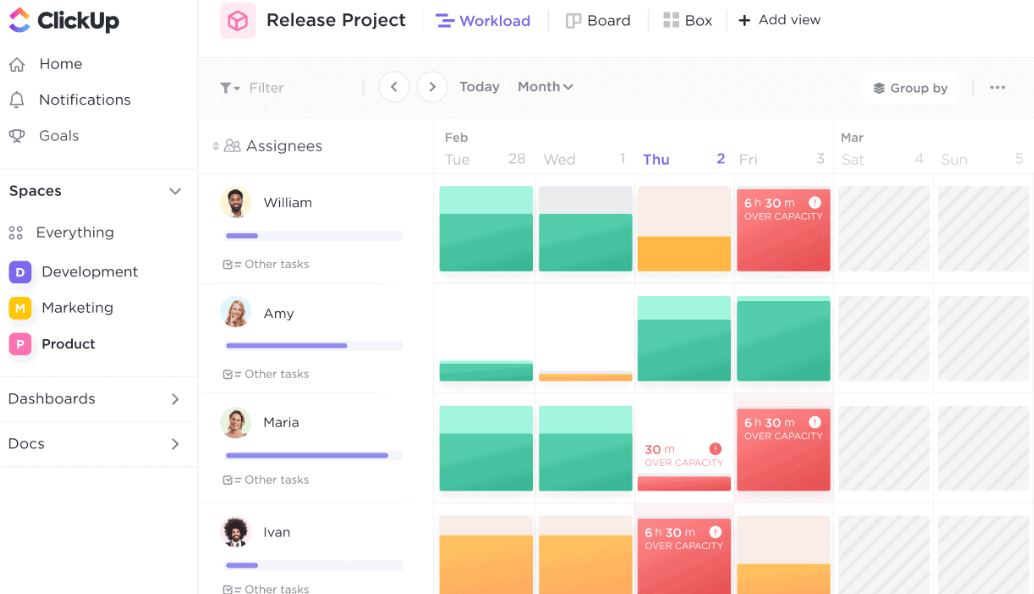
ClickUp is one of the top retrospective tools to consider. It offers a user-friendly interface and customization options that let teams tailor their retrospectives to fit their specific needs.
ClickUp integrates with other tools, which is convenient for teams already using project management software like Jira. Its collaboration features let team members communicate and work together easily during retrospectives.
ClickUp is a strong choice for distributed teams, since its online capabilities let everyone participate regardless of location.
Reetro
Reetro is an agile retrospective tool that helps teams review and improve their processes. It offers a user-friendly interface that makes it easy for everyone to participate in the retrospectives.
With Reetro, you can customize your retrospective to fit your team’s needs and preferences, and it integrates with tools like Jira for seamless collaboration.
Reetro suits distributed teams well, since it provides online access and enables remote retrospectives. If you want an engaging tool to support your team’s process improvement, it’s worth a try.
ScatterSpoke
ScatterSpoke is a popular retrospective tool that helps teams review and improve their processes. Its easy-to-use interface makes it simple for anyone to take part in retrospectives.
Teams can customize their retrospective templates to fit their specific needs, and the tool integrates with other project management tools like Jira, allowing for seamless collaboration between team members.
ScatterSpoke is especially useful for distributed teams, since it enables remote participants to contribute to the retrospective process. Its features make it a strong choice for agile teams looking to optimize their workflows and continuously improve their projects.
Neatro
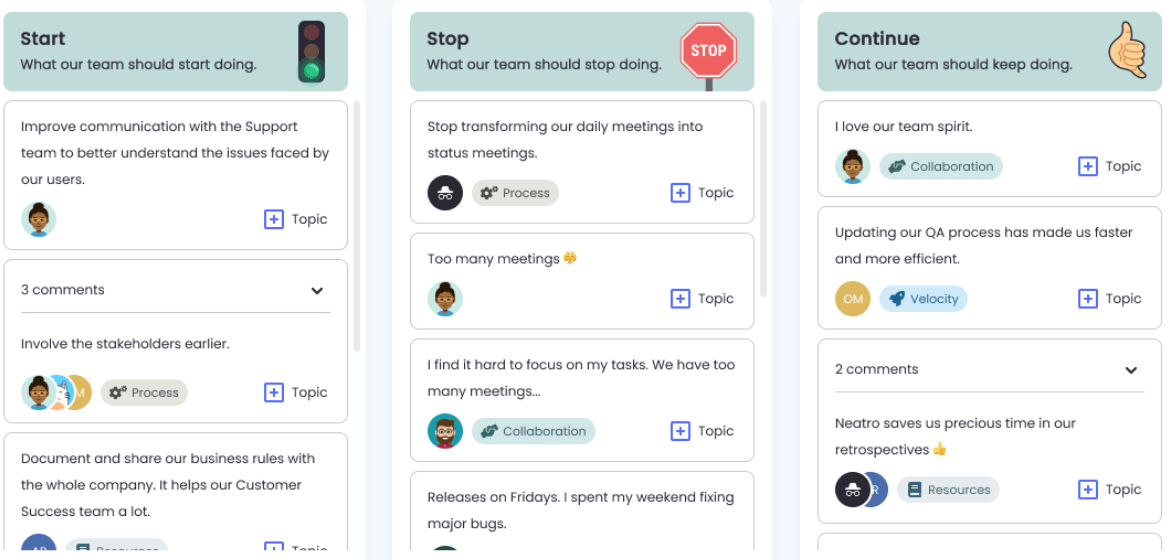
Neatro is one of the top 10 retrospective tools to try. It has an easy, user-friendly interface, making it a solid fit for agile teams and software developers. You can customize your retrospective process to match your specific needs and preferences.
This tool integrates well with other project management tools, allowing for seamless collaboration and efficient workflow analysis. Whether you’re a Scrum Master or part of a distributed team, Neatro gives you a platform for running engaging retrospectives that lead to real process improvement.
Parabol
Parabol is one of the top retrospective tools to consider. It offers a user-friendly interface and customizable options that make it easy for teams to review and rework their processes.
With integration capabilities for tools such as Jira, Parabol allows seamless collaboration among team members. This tool is particularly useful for distributed teams, since it provides remote retrospective functionality.
Parabol helps agile teams improve their workflow analysis and continuous improvement efforts by giving them a platform for efficient process optimization.
goReflect
goReflect is one of the top 10 retrospective tools. It provides constant process review, which makes it a valuable asset for agile teams, and it helps make project management and software development more efficient.
The tool offers a user-friendly interface, customization options, integration with other tools, and collaboration features. What sets goReflect apart is its ability to strengthen team synergy through distributed team retrospective capabilities.
It’s an online solution that remote teams can use just as easily as co-located ones.
EasyRetro
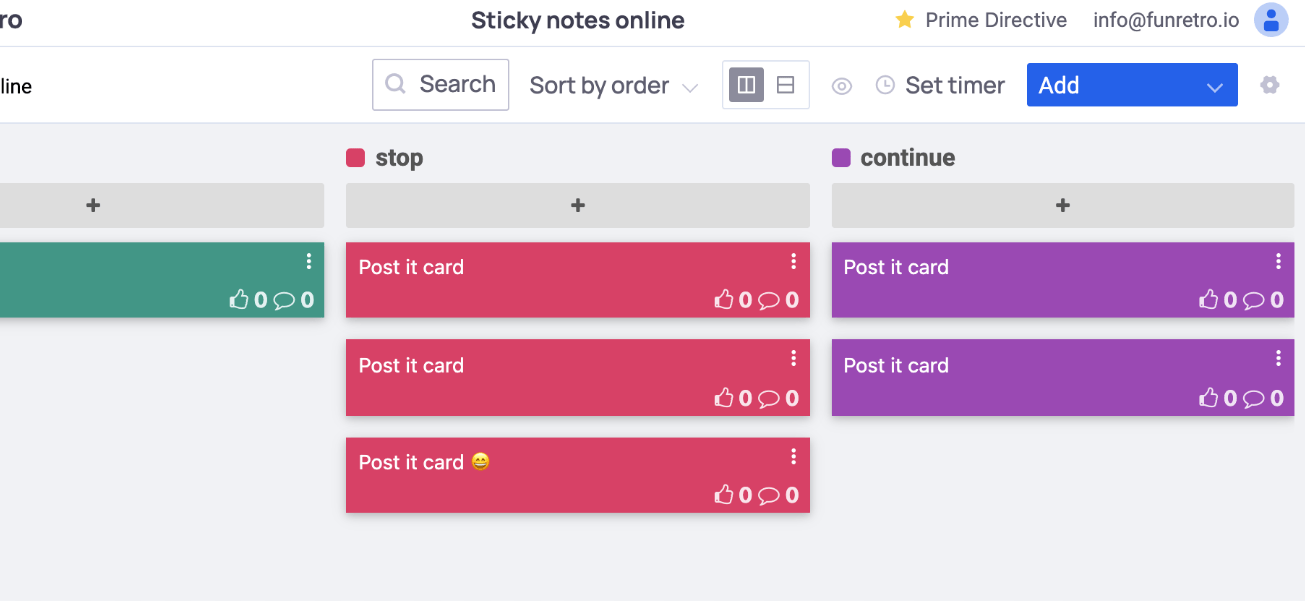
EasyRetro is one of the top retrospective tools. It’s a free tool that offers a fun, engaging way for distributed Scrum teams to run retrospectives, and it makes it easy for teams to collaborate and improve their processes without much hassle.
This tool provides customization options, letting users tailor their retrospectives to their specific needs, and its user-friendly interface makes it easy for even non-technical team members to participate actively.
EasyRetro is known for its simplicity and effectiveness in helping agile teams spot areas of improvement and drive continuous improvement initiatives.
TeamMood
TeamMood is a great retrospective tool for technology teams. It lets teams gauge the overall mood and satisfaction of team members, helping identify any issues that need attention before they grow.
Its user-friendly interface makes it easy for everyone to give feedback on how they feel about their work environment or projects, and it offers customization options that let teams tailor the tool to their specific needs.
Integration with other tools is possible too, which enhances collaboration and makes it easy to fold TeamMood into existing workflows. Overall, it’s a useful tool for tracking team morale and improving teamwork on technology projects.
RetroTool
RetroTool is one of the top 10 retrospective tools. It offers a user-friendly interface and customization options that make it easy for agile teams to review and rework their processes.
RetroTool also integrates well with other project management tools, allowing for seamless collaboration between team members, which is particularly helpful for distributed teams since it provides remote retrospective capabilities.
With RetroTool, Scrum Masters and product development teams can run engaging retrospectives that identify areas of improvement and strengthen team synergy.
Sprint Boards
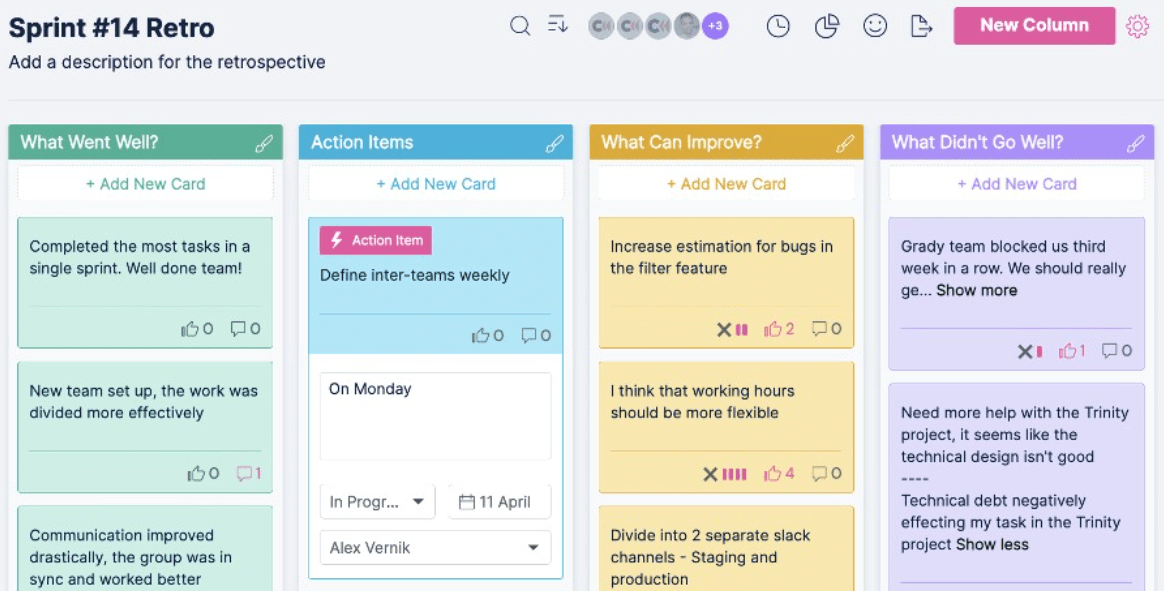
Sprint Boards is one of the top retrospective tools. It offers a user-friendly interface and customization options that make it easy for agile teams to review and rework their processes.
Sprint Boards also integrates well with other tools, allowing seamless collaboration among team members. This tool is particularly useful for distributed teams who need a reliable platform for planning, managing, and executing their projects.
With Sprint Boards, Scrum Masters can analyze workflow, evaluate performance, and optimize processes to drive continuous improvement. Whether you’re using Jira or working remotely, it’s an efficient solution for running sprint retrospectives.
Conclusion: The Benefits of Using Retropective Tools for Process Improvement
Using retrospective tools can meaningfully help teams improve their processes. These tools provide a user-friendly interface, customization options, integration with other tools, and collaboration features, all of which add up to smoother, more productive retrospectives.
By using the top 10 retrospective tools covered here, such as ClickUp and EasyRetro, teams can strengthen their project management, software development, and agile practices for better review and rework processes, and build the habit of continuous improvement sprint over sprint.
Frequently Asked Questions
What is a retrospective tool?
A retrospective tool is software that helps teams review and improve their processes by facilitating discussions, collecting feedback, and tracking action items.
How can retrospective tools benefit my team?
Retrospective tools can help your team identify what is working well and what needs improvement in your processes. They provide a structured framework for reflection, collaboration, and continuous learning.
Are these retrospective tools easy to use?
Yes, most of the best retrospective tools are designed to be user-friendly with intuitive interfaces and simple navigation. They typically require minimal technical knowledge to get started.
Can I try out multiple retrospective tools before deciding which one to use?
Yes, many retrospective tools offer free trials or have free versions available for you to test out before making a decision on which tool works best for your team’s needs.
Are these retrospetive tools compatible with different types of project management methodologies?
Yes, most of the top retrospective tools are flexible enough to work with various project management methodologies such as Agile, Scrum, Kanban, Waterfall, etc., allowing teams from different industries or workflows to benefit from using them.
