
The global IT job market in 2026 looks stable on paper, with a seemingly strong pool of applicants. Yet companies keep reporting stalled hiring and unfilled technical roles. The main driver is the speed of change in AI, cloud infrastructure, and cybersecurity, which has redrawn what “qualified” actually means faster than training systems and professionals can keep up.
The result isn’t a shortage of people. It’s a gap between what employers demand and what candidates can demonstrably deliver. According to Techreviewer’s research data, 53.7% of employers report struggling to find candidates who meet their skill requirements.
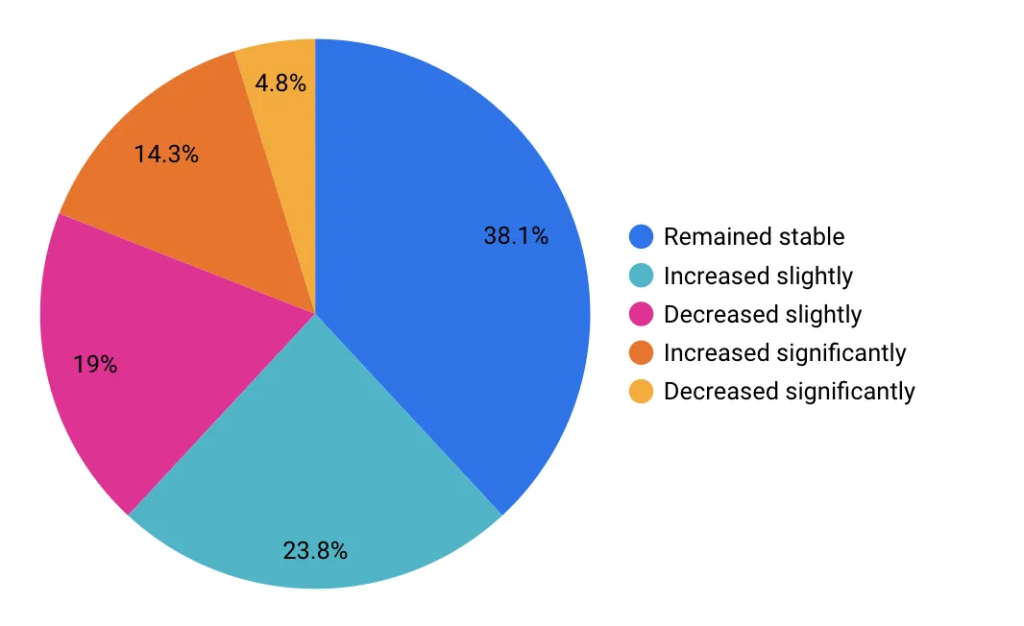
The same data points to alignment, not availability, as the real problem. That calls for more realistic candidate sourcing in 2026, with the core task being to turn talent availability into job-ready performance through skills validation, structured reskilling, and similar approaches. This article walks through the gap and the fixes, using the 2026 Techreviewer research.
The IT Labor Market Snapshot
On the surface, 2026 hiring activity looks decent: 71.6% of companies rate their candidate pool as strong, and Techreviewer’s research shows numbers in several mid-level engineering categories look balanced. The deeper structural mismatches only show up once you look past the headline figures.
Candidate pipelines in the IT labor market appear full, but mostly for generalist roles: entry-level developers, QA engineers, and support specialists. The friction starts when employers need niche expertise in emerging tools like AI or specific platforms, with 22.4% of respondents reporting dissatisfaction with skill fit, experience, and expectations.
Surface-level metrics suggest plenty of talent, but the aggregate numbers lump basic technical literacy together with execution-ready, advanced capabilities. A developer with five years on legacy systems, for example, won’t automatically be ready for modern AI integration work.
The IT labor market reflects a layered imbalance: volume exists, but precision rarely does. That distinction matters more than the headline numbers suggest, because it’s precision, not raw candidate count, that determines whether a role actually gets filled.
What Skills Mismatch Really Means in 2026
In IT specifically, a skills mismatch happens when candidates lack immediate performance competencies. That gap is usually about depth, not breadth, in the available professional pool.
General tech knowledge, coding basics, networking fundamentals, system maintenance, is widely available. What employers increasingly want is specialized expertise in defined ecosystems or AI-driven workflows.
Here’s what tends to create friction during hiring:
- Skills limited to outdated or irrelevant tool stacks
- Insufficient exposure to cloud-native environments and little real-world cybersecurity incident handling
- AI or automation integration knowledge without real-world deployment experience
Techreviewer’s findings line up with broader market commentary: the shift from generalist roles to specialist functions has picked up pace recently. That’s part of why the shortage in high-quality candidates rose from 28.6% in 2024 to 49.3% in 2025. Basic IT literacy no longer covers what operations actually demand.
Roles Experiencing the Sharpest Imbalance
This mismatch shows up most in highly specialized roles. Techreviewer’s research found these advanced roles consistently take longer to fill than general IT positions, reinforcing the depth gap: 50.7% of companies now lean on Training & Development programs to close it.
Artificial Intelligence and Machine Learning Experts
AI adoption is expanding fast, and 10.4% of respondents even see AI as a replacement for jobs. Even so, real proficiency in ML, hands-on deployment experience, and solid AI governance knowledge remain hard to find.
Cloud Infrastructure and DevOps Engineers
The move to more scalable cloud systems has driven up demand for engineers skilled in architecture optimization, automated pipelines, and cost governance specifically, an area where general system administrators often fall short.
Cybersecurity Professionals
As digital attack surfaces grow, security teams need advanced threat detection and response skills. Basic security certifications rarely match what enterprises now expect.
These roles are hard to fill not because candidates don’t exist, but because the technical bar has genuinely moved higher. Employers now prioritize measurable, hands-on experience in modern environments over credentials alone, which leaves a lot of otherwise capable people looking underqualified on paper.
Why Hiring Breaks Down Despite Available Talent
Persistent hiring problems come from a mix of employer behavior and market conditions. Here’s how that breaks down:
Employer-Side Constraints
Organizations often define open roles around an ideal profile, when in practice the role should reflect what the best of a realistically available pool can deliver. Narrow job descriptions end up shrinking the candidate pool before interviews even start, driven by:
- Escalating expectations for multi-tool mastery
- Highly specific experience requirements
- Automated screening systems that filter out potentially adaptable candidates
Market-Side Constraints
The shift from legacy systems to AI-driven architectures is moving faster than many professionals in the IT labor market can realistically retrain for:
- Rapid technological evolution outpacing training cycles
- Academic curricula that lag behind the applied industry’s needs
- Limited project-based exposure among early-career professionals
Hiring delays often trace back to misaligned evaluations rather than true scarcity, which is part of why around 83.6% of employers now run upskilling programs to stay competitive.
How the Companies Are Now Adjusting
Forward-looking organizations are actively adjusting their strategy instead of waiting for a perfect candidate to show up. The main shifts include:
- Targeted Upskilling and Reskilling Internally: Structured workforce upskilling programs that target high-demand tools
- Skill-based Hiring: Weighting skills over degree-heavy filters
- Remote Workforce: Sourcing more remote candidates (49.3%) without lowering the capability bar
Workforce upskilling has become central rather than optional, which is why companies are putting money into internal training paths that shorten ramp-up time on emerging technologies.
Conclusion
Today’s IT job market struggles because candidates skilled enough to meet actual job requirements are hard to find. The surface number of qualified applicants suggests abundance, but specialized roles stay unfilled regardless.
Closing this gap takes adaptive hiring practices and sustained workforce upskilling. Companies need to recalibrate their expectations, invest in structured learning, and refine how they source candidates to navigate the 2026 challenge more effectively.
The path forward isn’t about finding more talent. It’s about building stronger connections between capability and opportunity, so the people already in the pipeline actually get matched to the roles they’re capable of doing.
