
Papaya Global vs OysterHR: As hiring across borders becomes standard for growing businesses, managing payroll, compliance, and local employment laws remains a major challenge, even for teams that already have HR processes figured out domestically.
Rippling is another EOR option worth weighing here — it runs global payroll and employer-of-record hiring alongside a full HR platform, rather than as a standalone tool. Try Rippling free →
That’s where Employer of Record (EOR) software is central. These platforms let companies hire, pay, and support international employees without needing to establish legal entities in each country they operate in.
With the rise of remote and distributed teams, tools like Papaya Global and OysterHR are gaining traction to simplify global payroll and compliance management, taking on work that used to require local accountants and lawyers in every country.
In this comparison, we’ll break down how both platforms operate, what sets them apart, and which one aligns better with your hiring goals, company size, and global expansion plans.
We’ll also highlight pricing transparency, onboarding speed, support quality, and scalability so you can make an informed decision and avoid common pitfalls in global hiring.
What This Blog Compares: Papaya Global vs OysterHR Features and Use Cases
For businesses exploring global payroll and international hiring solutions, this comparison offers a straightforward look at two leading employer-of-record (EOR) platforms: Papaya Global and OysterHR.
Here’s what you’ll learn:
- A quick overview of how EOR software supports global employment
- Feature-by-feature comparison of Papaya Global and OysterHR
- Key benefits and considerations for each platform
- Real-world use cases based on company size and hiring goals
- Pricing insights and customer feedback
- A final summary to help you choose the right EOR solution
Whether you’re hiring your first international employee or managing teams across multiple countries, this guide is designed to support a confident, informed decision at whatever stage your company is in.
How EOR Software Enables Global Hiring in 2026
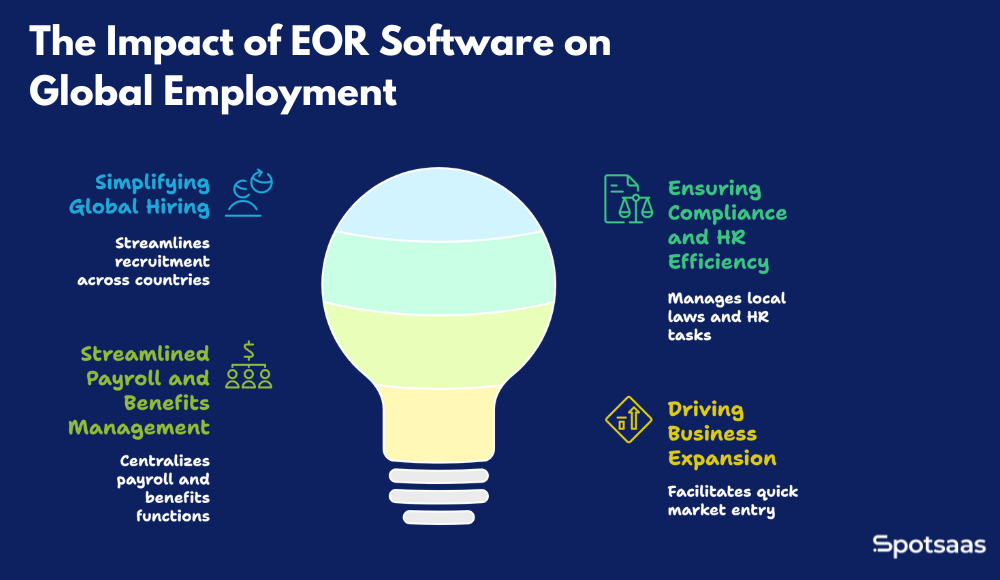
EOR software changes the way companies hire and manage international talent. As businesses expand their operations, this technology simplifies onboarding employees worldwide while maintaining compliance with local regulations that would otherwise take months to research on your own.
How EOR Platforms Simplify International Talent Acquisition
By using EOR software, companies can extend their reach to a diverse pool of talent across different countries instead of limiting hiring to wherever they already have an office. This platform simplifies recruitment. This makes it easier for businesses to engage qualified professionals without needing to establish local entities.
With a focus on must-have features, the software supports organizations in building teams that drive innovation on a global scale.
Managing Global Compliance and HR Operations with EOR
EOR software takes the hassle out of handling local employment laws and regulations, which can differ significantly from one country to the next. It offers support in managing tax requirements, work permits, and employment contracts, so companies can focus on core business strategy while the software manages legal and HR obligations.
The system’s capabilities provide a clear structure for employment. This helps ensure processes meet local standards and guidelines.
EOR-Driven Payroll Automation and Global Benefits
Managing payroll and employee benefits across borders can get complex fast, especially once you’re juggling different currencies and tax rules at the same time. EOR software centralizes these functions into a single platform. It automates payroll processing, tracks benefits, and manages deductions, which helps reduce errors and saves time.
Companies can offer competitive benefits packages while keeping administrative tasks simple and transparent.
How EOR Software Supports Global Business Expansion
For organizations looking to broaden their global footprint, EOR software is a strategic asset. It supports growth by letting businesses quickly hire talent in new markets without the delays often tied to setting up local offices, which can take months on their own.
This makes it easier for companies to adapt to market demands, improve productivity, and drive overall growth.
Papaya Global vs OysterHR: Side-by-Side EOR Comparison
| Feature | Papaya Global | OysterHR |
|---|---|---|
| EOR Coverage | 160+ countries | 180+ countries |
| Contractor Management | Available with global payment tools | Available with invoicing and contractor compliance |
| Payroll Processing | Automated multi-country payroll engine | Global payroll for employees and contractors |
| Entity Setup Required | No – Papaya acts as legal employer | No – Oyster handles all legal employment |
| HR Features | Compliance, workforce analytics, benefits management | Localized benefits, document management, compliance |
| Integrations | ERP, HCM, accounting tools like NetSuite, Workday | Popular tools including BambooHR, QuickBooks |
| Onboarding Time | Typically 2–3 days per country | Fast onboarding—often within 48 hours |
| Pricing | Custom based on region and services | Transparent tier-based pricing (starting at ~$499/mo per employee) |
Papaya Global vs OysterHR – Overview
Papaya Global Overview: Is Papaya Global Right for Your Global Team?
Papaya Global is built for companies looking to manage global payroll and workforce compliance through one centralized system, not a patchwork of local providers. With a presence in over 160 countries, it lets businesses hire international employees through EOR, manage contractors, and simplify payments, all without opening local entities.
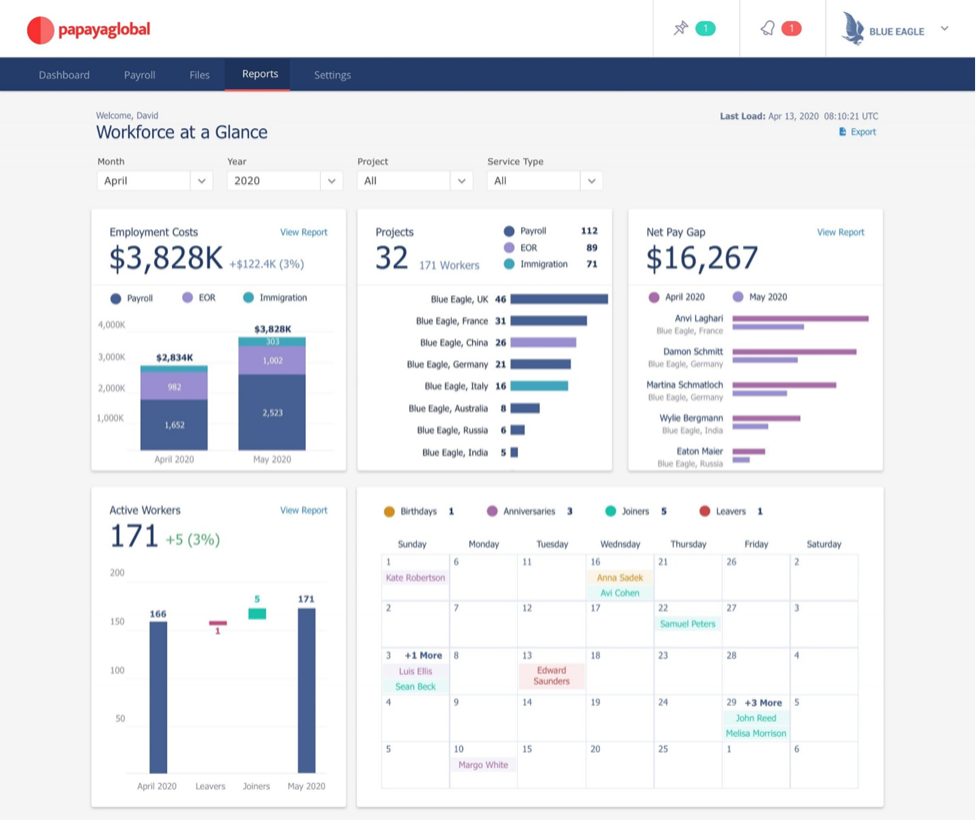
Built to handle complexity at scale, Papaya’s platform combines payroll automation, compliance tracking, and analytics. This makes it a go-to choice for mid-sized and large enterprises expanding across multiple regions at once.
Top Features of Papaya Global EOR Platform
- Hiring International Employees with Papaya’s EOR Network: Papaya Global lets companies hire full-time employees in more than 160 countries through its Employer of Record (EOR) network, so businesses can expand internationally without setting up local subsidiaries or navigating complex legal processes.
- Papaya Global’s Automated Multi-Country Payroll System: The platform offers an automated payroll system that ensures timely and accurate salary payments, tax deductions, and contributions across different regions. It supports multi-currency payroll, handles local tax laws, and reduces manual overhead for finance teams running payroll every cycle.
- Global Workforce Analytics & Compliance Features in Papaya: Papaya gives companies a high-level view of their global workforce. With real-time analytics, payroll reports, and compliance tracking, HR and finance teams can make informed decisions backed by accurate, up-to-date data.
- Papaya’s All-in-One Dashboard for Global Employee Management: From onboarding to offboarding, Papaya centralizes employee information and payroll records in one secure dashboard, simplifying internal workflows and keeping HR, finance, and legal departments aligned.
Papaya Global Pricing
Papaya Global offers custom pricing based on your company size, country coverage, and services used, so no two quotes look exactly the same.
- EOR pricing typically starts at around $650–$700/month per employee
- Contractor management is available with volume-based pricing
- Global payroll is priced per employee, with tailored packages for large teams
Papaya Global’s pricing is flexible and scales with your hiring plans and locations, so it’s worth getting a quote for your specific mix of countries.
Pricing shown is approximate; check vendor websites for current rates.
OysterHR Overview: Who Should Choose OysterHR for Global Hiring?
OysterHR is built with simplicity and speed in mind, ideal for startups, remote-first companies, and growing teams that don’t want a steep learning curve. The platform supports hiring in over 180 countries. This helps businesses onboard global employees without needing to open a local entity.
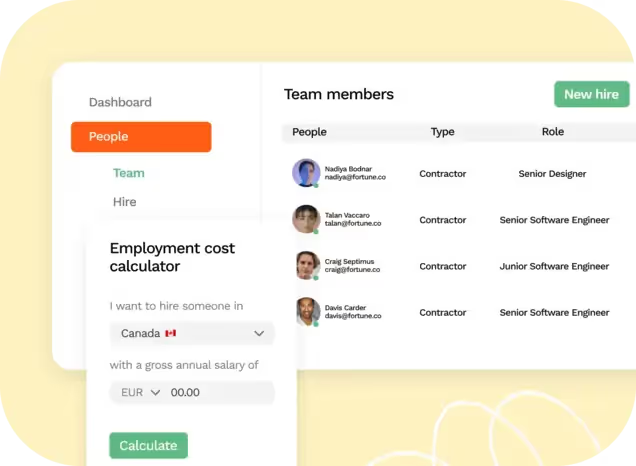
Its focus on transparency, employee experience, and legal compliance makes it a solid choice for companies looking for a straightforward way to build international teams without a large in-house HR function.
OysterHR’s Top Features for Remote and Global Teams
- OysterHR EOR Services: Hire in 180+ Countries: OysterHR lets companies hire full-time employees across more than 180 countries without needing to set up local legal entities. The platform acts as the legal employer, handling country-specific employment requirements on your behalf, from contracts to statutory benefits.
- OysterHR’s Contractor Management and Local Invoicing Tools: Whether you’re working with a freelancer or long-term contractor, Oyster makes it simple to create contracts, manage invoices, and ensure correct tax treatment based on local rules. Payments can be made in local currencies, helping both compliance and convenience for both sides of the working relationship.
- How OysterHR Simplifies Global Onboarding and Documentation: Oyster provides a smooth onboarding experience for global hires. Employees receive country-specific contracts and documents, automatically generated and easy to complete, which cuts down on manual HR involvement and back-and-forth emails.
- OysterHR’s Built-In Benefits for Global Employees: The platform offers access to health insurance, equity support, and region-specific perks. This helps companies offer a more competitive package across borders and improve employee satisfaction and retention.
OysterHR Pricing
OysterHR uses a transparent pricing model:
- EOR starts at $499/month per employee
- Contractor Management is available at $29/month per contractor
- Global payroll and add-on services are billed separately
OysterHR pricing is designed to support smaller teams while scaling with your workforce as headcount grows.
Pricing shown is approximate; check vendor websites for current rates.
Detailed Feature Comparison: Papaya Global vs OysterHR
Global Payroll: Papaya vs OysterHR Breakdown
- Papaya Global provides a multi-country payroll engine with automated calculations, compliance handling, and detailed reporting that finance teams can pull from directly.
- OysterHR also supports international payroll with a easy-to-use setup that’s ideal for startups and remote teams that want to get up and running quickly.
Comparing EOR Capabilities: Papaya vs OysterHR
- Papaya Global is suited for mid to large companies looking for structured EOR solutions with deep analytics and integrations into their existing finance stack.
- OysterHR offers flexible EOR services that simplify hiring in 180+ countries, especially for fast-growing or smaller teams without a dedicated compliance team.
Contractor Tools: Papaya vs OysterHR Comparison
- Papaya lets businesses manage and pay contractors in local currencies, including document and compliance tracking for each contract.
- OysterHR makes it easy to onboard and pay contractors with localized agreements and basic invoicing tools that don’t require much setup.
Local Compliance and Legal Support: Platform Differences
- Papaya handles compliance across 160+ countries, helping ensure accurate tax filings, labor law adherence, and reporting for every entity you hire in.
- OysterHR supports compliance in 180+ countries, focusing on prebuilt local contracts, benefits, and filings that are ready to use out of the box.
Onboarding Automation: Which Platform Makes It Easier?
- Papaya Global centralizes the onboarding process with automated documentation and lifecycle tracking from hire to offboarding.
- OysterHR offers self-serve onboarding with ready-to-use templates tailored to each hire’s location, cutting down the back-and-forth with HR.
Which EOR Platform is Right for You: Papaya Global vs OysterHR
| ✅ Papaya Global | ✅ OysterHR |
|---|---|
| 📊 Large, distributed teams | 🚀 Startups & SMBs |
| 📈 Advanced reporting & analytics | 🧾 Easy onboarding & setup |
| 🌍 Support in niche countries | 🌐 180+ country coverage |
| 🛠 ERP & HCM integrations | 💼 Built-in global benefits |
| 🔒 Centralized payroll control | 💡 Simple, easy-to-use tools |
Choose Papaya Global If You Need Enterprise-Grade EOR
- Your company operates across multiple regions and manages a large, distributed workforce
- You require advanced analytics, reporting, and integrations with ERP, HCM, or accounting systems
- You need global payroll and EOR support in niche or less commonly served countries
- Your HR and finance teams prefer a centralized dashboard with automation and compliance visibility
- You’re looking for an enterprise-grade solution that scales with headcount and complexity
Choose OysterHR If You’re a Startup or Remote Team
- You’re a startup or growing SMB with a remote-first or globally distributed team
- You prefer a simplified platform with guided onboarding and localized document generation
- Transparent pricing and predictable costs are important for your budget planning
- You need to quickly hire employees or contractors in 180+ countries without legal entity setup
- You’re focused on offering global benefits and a positive employee experience with minimal admin work
Pros and Cons: Papaya Global vs OysterHR
Papaya Global
| Pros | Cons |
|---|---|
| ✅ Advanced Reporting & Compliance Tracking | ❌ Enterprise-Heavy for Small Teams |
| ✅ Global Payroll & Payments in One Place | ❌ Limited Self-Serve Setup |
| ✅ 24/7 Support |
Pros
- Advanced Reporting & Compliance Tracking: Provides in-depth analytics for global payroll, compliance, and workforce insights that larger finance teams tend to rely on.
- Global Payroll & Payments in One Place: A simplified process for managing payroll and payments across multiple countries from a single view.
- 24/7 Support: Dedicated customer service is available around the clock for any issues or questions, which matters when payroll timing is tight.
Cons
- Enterprise-Heavy for Small Teams: The platform may be more complex than necessary for smaller teams or startups that just need the basics.
- Limited Self-Serve Setup: Setup can require more manual intervention and support, which may slow down initial deployment compared to more self-serve tools.
OysterHR
| Pros | Cons |
|---|---|
| ✅ Transparent and Easy-to-Understand Platform | ❌ Fewer Enterprise-Grade Controls |
| ✅ Great for Remote-First Companies | ❌ Reporting Tools Are Basic |
| ✅ Built-In Global Benefits Packages |
Pros
- Transparent and Easy-to-Understand Platform: Simple pricing and an intuitive interface, ideal for growing teams without a dedicated ops person.
- Great for Remote-First Companies: Focused on supporting teams that are distributed globally, with easy global hiring from day one.
- Built-In Global Benefits Packages: These offer employees access to health insurance, equity, and other benefits tailored to global teams in each region.
Cons
- Fewer Enterprise-Grade Controls: It lacks some of the advanced customization and controls needed for larger organizations with complex approval chains.
- Reporting Tools Are Basic: Reporting features may not be as detailed or customizable as those found in more enterprise-focused platforms like Papaya.
Why Use EOR Software for Global Payroll?
Simplified International Hiring Without Legal Entities
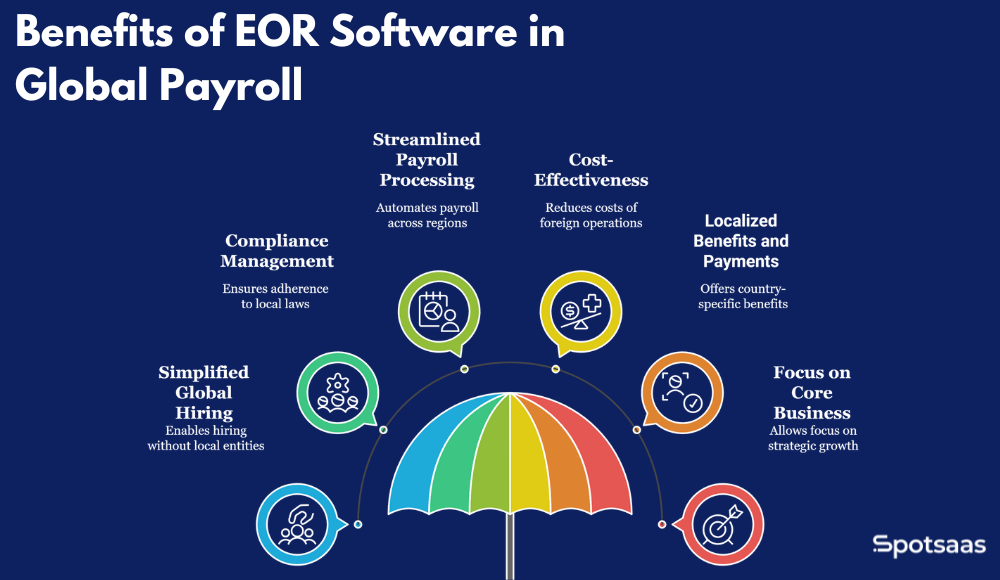
EOR software lets businesses hire employees in multiple countries without needing to set up local entities. This saves time and resources that would otherwise go into legal setup and registration.
It provides a simple way to expand your workforce globally, handling the complex administrative tasks involved so your team doesn’t have to.
Ensuring Global Compliance Through EOR Software
EOR helps businesses comply with local labor laws, tax regulations, and reporting requirements. This reduces legal and financial risk that would otherwise fall on the hiring company directly.
This helps avoid penalties and helps businesses adhere to the unique regulations of each country where they operate, even as those rules change over time.
Payroll Automation Across Borders: How EOR Helps
EOR software automates payroll calculations, tax deductions, and benefits management across different regions. This saves time and reduces errors that come from doing it manually in spreadsheets.
This lets businesses process payroll more efficiently, reducing manual workload and helping ensure timely, accurate payments for every employee regardless of location.
Cost Savings of Using EOR Platforms vs Entity Setup
EOR avoids the cost of establishing subsidiaries or offices in foreign countries by managing payroll, taxes, and benefits on your behalf instead of you building that infrastructure yourself.
This gives businesses a more affordable way to hire internationally, letting them enter new markets without the extra overhead of legal and accounting setup.
Offering Localized Benefits with EOR Software
EOR software gives employees country-specific benefits packages and payments in their local currencies. This improves employee satisfaction and retention across every market you hire in.
This helps ensure global employees receive benefits that comply with local laws and meet their expectations, which supports overall morale and a fairer employee experience.
Free Up Time for Strategy with EOR-Driven Admin Relief
By handling payroll, compliance, and HR tasks, EOR software lets businesses focus on growth and strategic initiatives instead of chasing paperwork across time zones.
It cuts down the time spent on administrative work, freeing teams to concentrate on core business activities and innovation that actually move the company forward.
Challenges to Expect with EOR Software in Global Payroll
Here are the challenges of EOR software in global payroll:
Challenge #1: Changing Local Labor Laws & Compliance
While EOR software helps with compliance, staying up-to-date with constantly changing labor laws, tax regulations, and reporting requirements across multiple countries can still be challenging, since rules can shift with little notice.
EOR providers must regularly update their systems to reflect local legal changes, which can result in delays or confusion.
Challenge #2: Limited Custom Payroll Flexibility
EOR platforms may not always offer the level of customization needed for unique business needs. Custom payroll solutions for specific country regulations or business requirements may not be available in every instance, particularly for less common pay structures.
Businesses with highly specialized payroll structures may find it difficult to adapt these solutions to their needs.
Challenge #3: High Costs at Scale for Large Teams
For companies with large global teams, the costs associated with using EOR software can add up quickly. EOR services typically charge per employee, and scaling up fast can lead to high monthly expenses that are worth budgeting for in advance.
Challenge #4: Managing Employee Data Across Borders
Handling sensitive employee data across multiple jurisdictions can raise data privacy issues, particularly with differing standards in regions like the EU (GDPR) or the US. EOR platforms must ensure compliance with global data protection regulations, which can be complex to manage as your workforce spreads across more countries.
Challenge #5: Reliance on External EOR Partners
When using EOR services, businesses rely on external providers for critical payroll and compliance functions. This dependency can become a challenge if the provider’s systems face technical issues, delays, or service disruptions, which can impact payroll accuracy and timeliness for employees who depend on getting paid on schedule.
Final Verdict: Papaya Global vs OysterHR
both Papaya Global and OysterHR offer valuable solutions for businesses looking to hire and manage global teams, but they cater to different needs and different stages of company growth.
Papaya Global excels for large enterprises and teams with complex global operations, providing advanced reporting, global payroll, and complete compliance support across 160+ countries. It’s a good fit for businesses that need deep integrations and structured support, especially those with finance and HR teams that expect detailed data.
OysterHR, on the other hand, is a good fit for startups and SMBs looking for an easy-to-use, cost-effective platform to manage remote teams in 180+ countries without a lot of setup overhead.
With transparent pricing and built-in global benefits, OysterHR offers simplicity and flexibility for teams that don’t want to negotiate a custom contract. Ultimately, the right choice depends on the size of your business, the complexity of your operations, and your team’s growth stage.
Related Global Payroll Reading
- Choosing multi-country payroll software — the evaluation criteria that only matter across borders
- Global payroll providers compared — the wider provider landscape
- Payroll outsourcing — including how EOR differs from a bureau or software
FAQs: Choosing the Right EOR Software
What is the difference between Papaya Global and OysterHR?
Papaya Global suits large enterprises with advanced features, while OysterHR is ideal for startups and remote-first teams.
Does Papaya Global offer a global payroll?
Yes, Papaya Global provides a unified global payroll system with automated compliance, tax management, and multi-currency payment options built in.
Can I manage contractors with OysterHR?
Yes, OysterHR supports contractor management, allowing payments, invoicing, and tax compliance across multiple countries with local support in each region.
Does OysterHR offer self-service onboarding?
Yes, OysterHR provides self-serve onboarding with localized documentation and contract generation for global hires and contractors alike.
Is there a free trial for Papaya Global?
Papaya Global doesn’t offer a free trial but provides demos and custom quotes based on your specific business needs and country coverage.
