
Sales can feel like untangling a knotted string, especially when you are not sure what is going on in your customers’ heads.
This article explains psychological principles such as reciprocity and social proof that shape consumer behavior.
Key Takeaways
- Understanding sales psychology matters for businesses because it explains buyer behavior and directly affects sales results.
- The seven principles of sales psychology are reciprocity, commitment and consistency, social proof, liking, authority, scarcity, and unity.
- By applying techniques such as building trust through reciprocity and using social proof, businesses can influence customer behavior and increase revenue.
The Importance of Understanding Sales Psychology
Understanding sales psychology matters for businesses because it explains buyer behavior and directly affects sales results. When you know the principles behind how consumers decide, you can build sales strategies that work and strengthen customer relationships. Instead of guessing why a deal stalls, you can trace the decision back to a specific need or hesitation and respond to it.
Definition of sales psychology
Sales psychology looks closely at the customer’s mind. It examines why people buy and how sales strategies can match those reasons to close deals more effectively. The focus stays on the emotional needs of customers, not only on product value, because a feature list rarely explains what actually pushes someone to say yes.
Reading the mindset of your target market also helps you sell products and services by addressing specific needs. Done well, this skill is a strong tool that improves sales success.
Why it’s important for businesses
Sales psychology gives a business an advantage. Using buyer psychology in the sales process changes outcomes. The better you understand customer needs, the easier it becomes to influence their buying decisions.
Managing a sales rep depends on this grasp of consumer behavior. It lets reps predict a customer’s mindset and anticipate what will satisfy them. That leads to more successful sales, which makes sales psychology essential for reaching and surpassing sales targets.
With this knowledge, businesses see better customer relationships, which brings more loyalty and revenue growth, all of which matter in a competitive market.
7 Principles of Sales Psychology
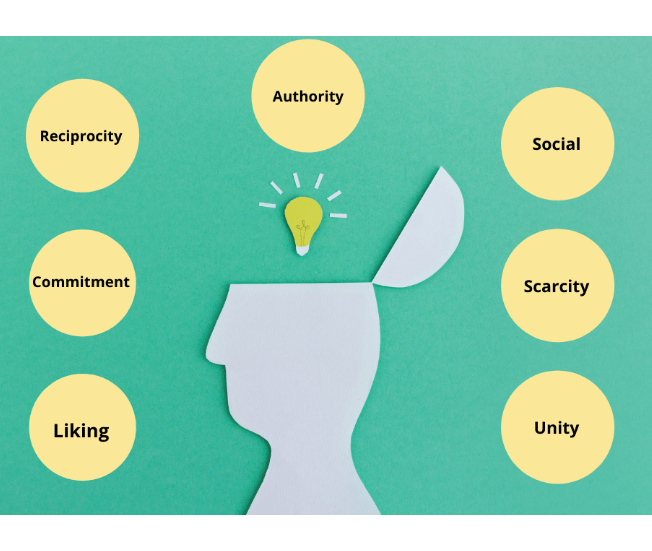
The seven principles of sales psychology are reciprocity, commitment and consistency, social proof, liking, authority, scarcity, and unity.
Reciprocity
Reciprocity plays a central role in sales psychology. It rests on the idea that people naturally feel a pull to give something back when they receive something.
Say you are a salesperson handing out free samples of your product. That act creates a quiet sense of obligation in customers, making them more likely to buy from you as a way of returning the favor.
This principle helps build relationships with potential buyers and raises the odds of a successful sale. Used properly, reciprocity leads to productive customer interactions and stronger buyer-seller connections. The gift does not have to be a physical sample either; useful advice, a helpful resource, or your time can trigger the same response.
Commitment and consistency
Commitment and consistency matter in sales psychology. Once customers make a commitment, whether a small purchase or simply an expression of interest, they tend to stay consistent with that decision.
The principle rests on the human need to keep beliefs and actions in line. By encouraging customers to commit to a purchase or the next step in the process, salespeople raise their chances of closing a deal.
You can reinforce consistency by reminding customers of earlier commitments or by showing how a current decision fits their values and goals. Applied well, commitment and consistency help build trust, strengthen customer loyalty, and drive business results.
Social proof
Social proof is a key part of sales psychology. It describes how people are more likely to buy when they see others doing the same.
It draws on our habit of following the crowd and looking to others for validation. By using social proof, salespeople build a sense of trust and credibility around their products or services.
When customers see testimonials, reviews, or case studies from satisfied customers, they get evidence that your offering has already helped others in similar situations. That evidence carries more weight when it comes from someone who looks like the buyer, works in the same industry, or faced the same problem.
That eases their doubts and raises their confidence in buying. Displaying logos of well-known companies you have worked with adds social proof too, by linking your brand to established businesses.
Social proof can shape customer behavior and decision-making in a real way. By showing positive experiences and proving that others have benefited from what you offer, you are more likely to attract customers and close deals.
Liking
The principle of liking matters in sales psychology. People are more likely to buy from someone they like and trust. Building rapport and a positive connection with customers raises the chance of a sale.
By finding common interests, showing genuine concern, and being friendly, salespeople create a likeable image that makes customers more inclined to say yes. Research backs this up: people are more influenced by those they admire or feel connected to.
By working on likability, salespeople improve their relationships with customers and lift their sales results. Likability is not flattery; it grows out of paying attention, remembering details, and treating the customer as a person rather than a target.
Authority
Authority is a key part of sales psychology. As a salesperson, it helps to establish yourself as an expert in your industry or product. By showing knowledge and expertise, you build trust with potential customers and add to your credibility.
You can do this by sharing relevant industry statistics, pointing to customer testimonials, or presenting any certifications or awards you have earned.
When customers see you as an authority, they are more likely to follow your recommendations and buy based on your expertise. Establishing authority is not about being arrogant or overbearing; it is about positioning yourself as someone who understands their needs and can provide useful solutions. Answering hard questions honestly, including when a product is not the right fit, often does more for your credibility than a polished pitch.
Scarcity
Scarcity is a strong principle in sales psychology. By creating a sense of limited availability or exclusivity, salespeople tap into the fear of missing out and prompt customer action.
Scarcity creates urgency and pushes customers to decide quickly before the chance disappears. Limited-time offers, exclusive promotions, and signaling that a product is running low all put this principle to work.
Knowing how scarcity shapes buyer behavior lets salespeople use it deliberately and raise their chances of closing deals. The claim has to be genuine, though; a deadline or stock limit that customers later find was fake damages trust and undoes the effect.
Unity
Unity is a strong principle in sales psychology. When you create a sense of unity with customers, it builds trust and rapport, which leads to stronger relationships and more sales.
By finding common ground and showing that you understand their needs, customers feel more connected to you and are more likely to buy. You can build unity through shared experiences or beliefs, such as showing how your product or service fits their values or goals.
Showing empathy and genuinely listening to their concerns builds unity too. When customers feel understood and valued, they are more inclined to choose you over competitors.
Research on buyer behavior supports the idea of unity. Studies show that people are more likely to buy from those they see as similar to themselves or part of the same group.
By emphasizing similarities rather than differences, you tap into this tendency and raise the chance of closing a sale. Salespeople should recognize the power of unity and build it into their approach by finding ways to connect with customers personally.
That might mean sharing stories, using language that matches their identity, or using social proof by pointing to testimonials from people similar to them.
Applying Sales Psychology in Practice
Sales psychology techniques can improve your sales results. By understanding reciprocity, commitment and consistency, social proof, liking, authority, scarcity, and unity, you can influence customer behavior and increase your revenue.
The sections below show real examples and explain how to build strong customer relationships on psychological insight. Read on to sharpen your selling through an understanding of consumer psychology.
Examples of using sales psychology
Here are some examples of how sales psychology can be used effectively:
| Strategy | Description |
|---|---|
| Building trust through reciprocity | Offer a free trial or valuable content before asking for a purchase. |
| Leveraging social proof | Highlight positive reviews or testimonials to show past positive experiences. |
| Creating scarcity | Use limited-time offers or exclusive deals to encourage immediate action. |
| Establishing authority | Position as an industry expert through content, certifications, or affiliations. |
| Utilizing likability | Build rapport by showing interest, listening, and finding common ground. |
| Enhancing commitment and consistency | Encourage small commitments leading towards the desired outcome and sale. |
| Understanding buyer motivation | Identify underlying needs or pain points and tailor the sales pitch accordingly. |
The benefits for customer relationships, loyalty, and revenue
Understanding the psychology behind sales brings clear benefits for customer relationships, loyalty, and revenue. By applying these principles, salespeople gain a deeper read on their customers’ needs and motivations.
That lets them build stronger connections with customers and earn trust and loyalty over time. Sales techniques grounded in psychology can also shape customer behavior and decisions in ways that increase revenue.
By reading buyer motivation and using persuasive techniques based on consumer psychology, sales professionals can meet customer needs and reach better sales outcomes. Customers who feel understood tend to come back and to recommend you to others, which turns a single sale into a longer relationship.

Recommended Reading and Resources
If you want to go deeper into the psychology behind sales and learn how to apply it, plenty of reading materials and resources are available.
The lists below point to books with useful insights on sales psychology, tools and techniques for putting it into practice, and online communities where sales professionals connect and learn from each other.
Expand your knowledge here to understand customer behavior better and improve your sales results.
Books and other sources for further study on sales psychology
To go deeper into sales psychology, several books and resources can expand your knowledge and skills. Here are some recommended sources:
| Source | Description |
|---|---|
| “Influence: The Psychology of Persuasion” by Robert Cialdini | This classic book explores the principles of influence and how they can be applied in sales situations. |
| “Pitch Anything: An Innovative Method for Presenting, Persuading, and Winning the Deal” by Oren Klaff | Klaff shares his unique approach to pitching and closing deals based on neuroscience and psychology. |
| “To Sell Is Human: The Surprising Truth About Moving Others” by Daniel H. Pink | Pink provides insights into modern sales techniques and how to navigate the changing landscape of selling. |
| “Spin Selling” by Neil Rackham | This influential book focuses on the art of asking effective questions during the sales process to uncover customer needs. |
| “The Challenger Sale: Taking Control of the Customer Conversation” by Matthew Dixon and Brent Adamson | This book challenges traditional sales methods and presents a new approach centered around challenging customers’ preconceptions. |
| Harvard Business Review’s “HBR’s 10 Must Reads on Sales” | This collection features articles from leading experts in sales psychology, providing a comprehensive overview of the topic. |
Tools and techniques for implementing sales psychology
To put sales psychology into practice, several tools and techniques can help:
| Strategy | Description |
|---|---|
| Utilize data analytics | Analyze customer behavior and preferences for targeted sales strategies. |
| Build relationships | Personalize interactions and understand customer needs. |
| Active listening | Listen attentively and ask probing questions to understand customer motivations. |
| Storytelling | Create emotional connections with customers through relatable stories. |
| Social media engagement | Respond promptly on social media, offer recommendations, and showcase positive experiences. |
| Develop persuasive communication skills | Use techniques like mirroring, positive language, and highlighting product benefits. |
| Follow up | Check-in with customers post-sale to ensure satisfaction and maintain relationships. |
Online communities and networks for sales professionals to learn and share insights.
Online communities and networks give sales professionals a place to learn and share insights with others in the field. These platforms include:
| Platform/Community | Description |
|---|---|
| Sales Hacker | Online resources, forums, and webinars for sales professionals to stay updated. |
| LinkedIn Groups | Groups for sales professionals to connect and share insights. |
| Quora | A Q&A platform for sales advice and perspectives from experts. |
| Sales Enablement Society | A platform for sales enablement professionals to collaborate and share best practices. |
| Reddit Sales Community | A forum for salespeople to discuss topics and learn from others. |
Conclusion
Understanding the psychology behind sales gives salespeople a competitive advantage. By focusing on customers’ emotional needs and applying the principles of sales psychology, they can better understand and meet the needs of their target market.
With this knowledge, salespeople can predict customer behavior, close more deals, and reach greater success in their sales work over the long run.
Frequently Asked Questions
How does psychology play a role in sales?
Psychology plays a role in sales by explaining consumer behavior, motivations, and decision-making so you can tailor effective strategies.
What are some psychological techniques used in sales?
Some psychological techniques used in sales include creating scarcity, using social proof, building rapport, using persuasive language, and appealing to emotions.
How can I build trust with customers through psychology?
Building trust with customers through psychology involves active listening, showing empathy, giving expert advice or testimonials, and following through on promises.
How can understanding buyer motivations improve my sales success?
Understanding buyer motivations helps you identify their needs and desires, so you can adjust your approach and offer solutions that resonate with them.
What impact does pricing have on consumer psychology?
Pricing affects consumer psychology because it shapes perceptions of value; options such as anchoring or offering discounts can influence purchasing decisions.
